Wisdom tooth pain: easing the flare-up and knowing when to remove it
Pain at the very back of the mouth, swollen gum behind the last molar, trouble opening or swallowing: often a wisdom tooth erupting badly. The flare-up usually settles in a few days but tends to come back.
What is happening
When a wisdom tooth is only partly through, a flap of gum still covers it. Food and bacteria collect underneath and the gum gets infected: pericoronitis. Sometimes the pain comes from decay on the wisdom tooth or the molar next to it.
Signs
- Red, swollen, painful gum behind the last tooth.
- Pain spreading to the ear or throat.
- Difficulty opening or swallowing.
- Bad taste or breath, sometimes pus, fever or a swollen gland.
Calming it while you wait
- Brush the area gently with a soft brush.
- Rinse with warm salt water after meals.
- A painkiller you tolerate, following the leaflet.
- Soft food on the other side, cold on the cheek, never heat.
Come quickly if
- The pain lasts more than two or three days or keeps you awake.
- You can barely open your mouth.
- Your cheek swells or you have a fever.
- Trouble swallowing or breathing: hospital at once.
What the dentist does
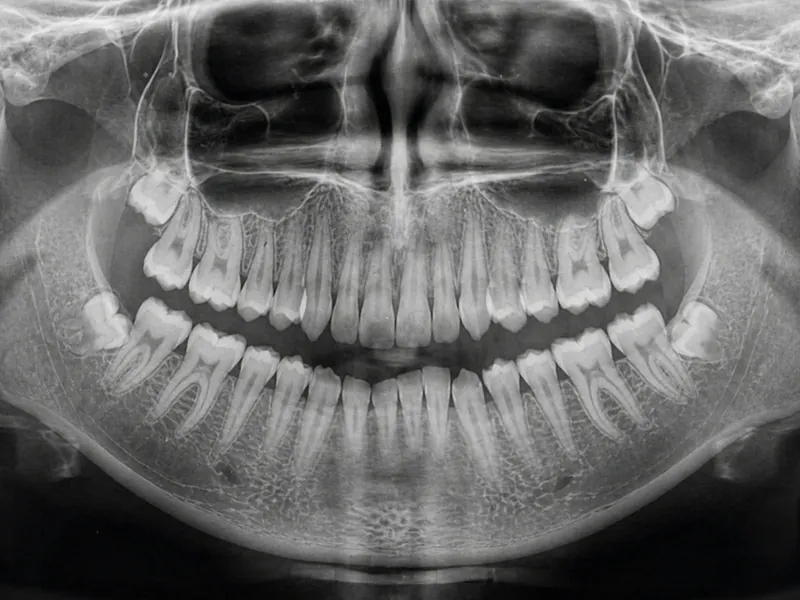
The area under the gum flap is cleaned and disinfected; antibiotics if infection spreads. A panoramic X-ray shows the tooth position and the nerve.
Does it need to come out?
Not always. Removal is usually advised when flare-ups repeat, the tooth is decayed or damages its neighbour, it grows sideways, or a cyst forms. It is done under local anaesthetic, ideally once the flare-up has settled.
In Tangier, call maRose on +212 5 39 33 62 46 or WhatsApp +212 6 60 04 02 64.
The treatment behind this article
Removing a tooth gently when it can no longer be saved.